

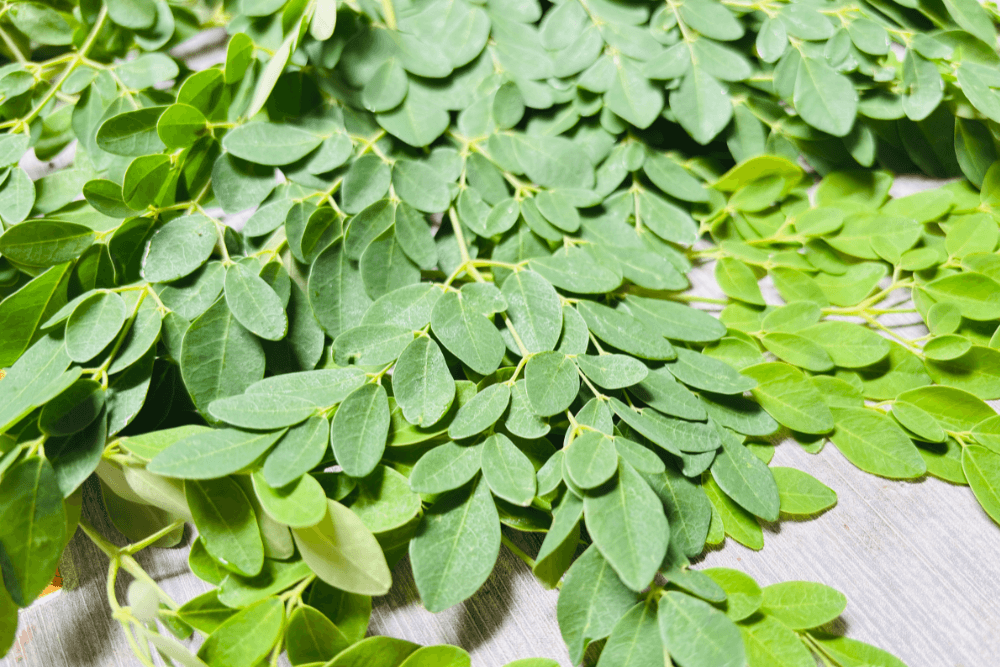
Perhaps you already know that moringa is supposed to be good for you.
Maybe you’ve seen it on labels, heard it mentioned alongside superfoods like spirulina and turmeric, or maybe you even picked up a bag of the powder at some point.
However, here’s what most people don’t know: moringa isn’t just “good for you” in a vague, general way. It may be one of the most targeted natural solutions available for the two things that quietly drag down quality of life for so many people — persistent fatigue and difficulty thinking clearly.
And unlike a lot of what gets called a “superfood”, moringa has the research behind it to back that up.
If you’ve ever dragged yourself through an afternoon where your energy just falls off a cliff, or sat down to work on something and found yourself reading the same paragraph three times without it sinking in, keep reading.
There’s a good chance what’s going on in your body has a lot to do with what moringa directly addresses.
What Exactly Is Moringa?
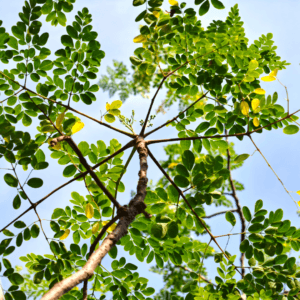
Moringa oleifera is a tree native to the sub-Himalayan regions of northern India, with deep roots across Africa and Southeast Asia as well.
Every part of the tree has been used medicinally across these cultures for thousands of years, but it’s the leaves that researchers keep coming back to, because their nutritional profile is genuinely extraordinary.
Gram for gram, moringa leaves contain:
- 7 times more vitamin C than oranges
- 4 times more calcium than milk
- 4 times more vitamin A than carrots
- 2 times more protein than yogurt
- 3 times more potassium than bananas
Beyond those headline numbers, moringa contains over 90 nutrients in total, including all nine essential amino acids, making it one of the very few plant foods that qualify as a complete protein.
It’s also exceptionally rich in polyphenols, flavonoids, and other plant compounds that research has confirmed have real protective effects in the body.
Here’s the part that surprises most people: moringa doesn’t grow anywhere in the United States, Canada, or most of Europe. It’s a tropical plant, which means that unless you’ve spent significant time in South Asia or sub-Saharan Africa, moringa has simply never been part of your diet, and your body has been missing its unique nutritional profile your entire life.
Why Moringa Can Give You Real, Lasting Energy

There’s a key difference between what moringa does and what caffeine does.
Caffeine borrows energy from your future self by blocking the brain chemicals that make you feel tired, giving you a temporary lift, and then dropping you. Moringa works differently. It gives your body what it actually needs to generate energy on its own.
One of the main pathways is iron. Iron is what your red blood cells use to carry oxygen throughout your body. When iron levels are even slightly low, your cells don’t get the oxygen they need, and fatigue follows. Moringa leaves are a rich source of plant-based iron, and importantly, they’re also high in vitamin C, which significantly boosts how well your body absorbs that iron.
Studies have shown that moringa supplementation can meaningfully improve hemoglobin levels, with one systematic review finding reductions in anemia prevalence of up to 53% in supplemented groups.
Then there are the B vitamins (thiamine, riboflavin, niacin, B6), all of which moringa contains, and all of which are essential cofactors in the metabolic processes that convert the food you eat into usable cellular energy. When these are in short supply, your mitochondria can’t do their job properly, and “tired all the time” becomes your default setting.
Moringa is also a solid source of magnesium, a mineral involved in more than 300 enzymatic reactions in the body, including energy production. Deficiency in magnesium is far more common than most people realize, and persistent fatigue and muscle weakness are among its most consistent symptoms.
Researchers have also found that bioactive compounds in moringa help protect mitochondrial function itself, reducing oxidative damage to the energy-producing machinery inside your cells. This matters because mitochondrial decline driven by chronic oxidative stress is increasingly understood as one of the primary reasons energy levels fall as we get older.
The Brain Fog Connection

Brain fog is one of those things that sounds vague but feels very specific when you’re in it.
You walk into a room and forget what you came for. You re-read the same sentence four times. You search for a word you know perfectly well, and it just isn’t there.
It’s not dramatic, but it compounds slowly, until you start wondering if something is genuinely wrong.
Very often, something is. Not something catastrophic, but a combination of inflammation, oxidative stress, and nutritional gaps that quietly degrades how well your brain operates. Moringa addresses all three.
Moringa contains compounds called isothiocyanates, which are able to cross the blood-brain barrier, the protective filter that keeps most things out of brain tissue. Once inside, they exert neuroprotective effects. Research has documented that long-term moringa consumption improved spatial and non-spatial memory, protected against oxidative stress in the hippocampus, and inhibited enzymes associated with cognitive decline, in each case compared to a control group receiving no moringa.
Neuroinflammation (chronic, low-grade inflammation in the brain) is another major contributor to cognitive fog. Moringa’s anti-inflammatory properties are well-established. Studies have identified multiple anti-inflammatory compounds in moringa leaves, including flavonoids and phenolic acids, that work through key inflammatory signaling pathways to reduce neuroinflammation. When brain inflammation comes down, mental clarity tends to improve noticeably.
Moringa is also rich in zinc, which is required for the synthesis of several key neurotransmitters that influence mood, memory, and focus. And its antioxidant profile — including quercetin and chlorogenic acid — helps neutralize the free radical damage to brain cells that accumulates over time and contributes to the cognitive decline many people mistakenly accept as just part of getting older.
Other Things Moringa Does for Your Body
Energy and focus are the headliners here, but it’s worth knowing that moringa’s effects on the rest of your body are just as significant.
Blood sugar
This is one of moringa’s most studied areas. A meta-analysis of multiple randomized controlled trials found that moringa powder significantly reduced fasting blood sugar levels. This matters directly for energy. Blood sugar crashes are likely one of the primary drivers of your afternoon slump and inability to concentrate that so many people experience.
Heart health
Clinical trials have found meaningful improvements in cholesterol and blood pressure in participants taking moringa. Healthy cardiovascular function supports healthy blood flow to the brain, which is foundational to mental clarity.
Inflammation
Chronic systemic inflammation is a root driver of fatigue, cognitive decline, joint discomfort, and accelerated aging. Moringa’s isothiocyanates and flavonoids have been shown in research to actively suppress inflammatory pathways, not just in the brain but throughout the body.
Antioxidant Defense
Moringa doesn’t just provide antioxidants directly. Studies have found that moringa also upregulates the body’s own antioxidant systems, including superoxide dismutase and glutathione, meaning it actively helps your body protect itself at the cellular level.
What to Look For in a Moringa Supplement
Fresh moringa leaves are essentially unavailable in most of the United States. What you’re most likely to find is moringa powder or capsules, and the quality varies enormously.
Many moringa supplements are padded with fillers — magnesium stearate, silicon dioxide, microcrystalline cellulose — that dilute the active compounds and add nothing to your health. Look for a product where moringa leaf is the only ingredient.
Processing matters as much as sourcing. Moringa’s most heat-sensitive nutrients — certain vitamins, enzymes, and antioxidant compounds — are degraded by high-heat processing. Cold-processed or low-heat dried moringa preserves significantly more of what you’re actually trying to get.
And third-party testing is non-negotiable. Because supplements aren’t regulated the way pharmaceuticals are, independent lab verification is the only reliable way to confirm that a product contains what it claims to contain, at the potency claimed, and free of contaminants.
Our Top Recommendation: Science Natural Supplements Moringa (Buy 1, Get 3 Free Today)
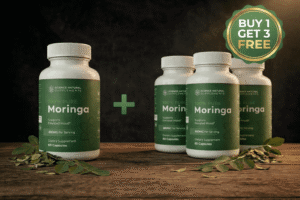
There are many moringa products on the market. Most of them don’t meet the standard outlined above. The one we recommend does.
Science Natural Supplements Moringa is formulated with a single ingredient: 800mg of 100% pure moringa leaf per capsule. Nothing else. No fillers, no proprietary blends, no additives of any kind.
The moringa is harvested at peak potency, cold-processed to preserve heat-sensitive nutrients, and every batch is independently third-party tested for purity and potency. It’s manufactured in a GMP-certified facility right here in the United States.
Science Natural Supplements also backs every bottle with a 180-day money-back guarantee—the longest in the industry. That is six full months to decide whether moringa is working for you, with zero financial risk.
And right now, they are offering a Buy 1 Get 3 Free promotion, bringing your per-bottle cost down to just $12.25 (a fraction of what comparable quality costs from retail competitors).
If you have been looking for a natural, science-backed way to reclaim your energy and sharpen your focus, this is the product we recommend.
Dear Brian ,
I like very must your Information ❤️
from , Bente Merete Momsen.
I live in S.W. Florida. I have a moringa tree in my back yard. I simply strip off leaves and eat them.
I’ve had a whole bag of MORINGA powder in my cupboard for ages. I wonder if still good!
I have dried mornings leaves and when I steep for tea it is so bitter, it’s almost unpalatable. Any tips to reduce the bitterness