

You go to the doctor. You tell them you’re exhausted, foggy, and gaining weight for no clear reason.
They run blood work. It comes back normal.
And yet you still feel like your body is running at half speed.
Here’s what almost never gets tested, despite being involved in the function of every single cell in your body.
Iodine.
Iodine is classified as an essential mineral, which means your body cannot make it. It must come from outside sources. It is the primary raw material your thyroid uses to produce the hormones that regulate your metabolism, energy production, body temperature, heart rate, and brain function.
Without enough iodine, virtually every system in your body begins to slow down.
And the evidence is increasingly clear: iodine deficiency is far more widespread in the developed world than most people realize.
The Return of Iodine Deficiency
 Most people assume iodine deficiency is a solved problem. A relic of the early 20th century, when goiter was endemic across America’s “Goiter Belt.” The introduction of iodized table salt in the 1920s is rightly celebrated as one of public health’s great victories.
However, that victory is eroding.
Data from NHANES tracked over several decades tells a troubling story: median urinary iodine levels in the U.S. population dropped by approximately 50% between the late 1970s and the early 2000s.
Several factors have driven this decline:
- Widespread reduction in table salt consumption as part of cardiovascular health messaging, but the alternative salts people turned to (sea salt, kosher salt, Himalayan salt) which contain little to no iodine
- The decline in dairy consumption
- Increased consumption of processed foods, which use non-iodized salt
- Rising intake of competing halogens (such as fluoride in water supplies, bromine in commercial bread and many processed foods, chlorine in tap water) which displace iodine at the cellular receptor level
This last point deserves special attention.
Iodine belongs to a group of chemicals called halogens. Fluoride, bromine, and chlorine are halogens too. Because they’re so similar, they compete with iodine inside your body.
When you’re exposed to a lot of these chemicals—from drinking water, processed foods, and other everyday sources—they may make it harder for your body to use iodine.
Some researchers believe this can lead to a functional iodine deficiency, even if you’re getting some iodine in your diet.
Research has shown a clear connection between fluoride intake and hypothyroid-like symptoms in populations with even mild iodine insufficiency.
Why Your Doctor Probably Never Tested Your Iodine Levels
 Here is a fact that surprises most people.
Iodine is not included in standard blood panels. Not in a basic metabolic panel. Not in a comprehensive metabolic panel. Not even in most thyroid panels.
The standard thyroid test measures TSH, and sometimes T3 and T4. But these tests do not tell you whether iodine itself is adequate. A person can show a TSH within the “normal” range and still be significantly iodine-deficient.
The most accurate assessment of iodine status requires a 24-hour urinary iodine test, which is not routinely ordered in conventional medicine.
The result is that a significant proportion of people who present with classic iodine deficiency symptoms (fatigue, weight gain, cold intolerance, brain fog, hair loss, dry skin, constipation, depression) are told their thyroid “looks fine” and sent home.
The underlying nutritional issue never gets investigated.
Iodine and Your Thyroid: The Missing Link to Energy and Metabolism
 To understand why iodine deficiency produces such wide-ranging symptoms, you need to understand what thyroid hormones actually do.
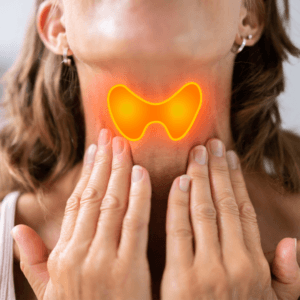
The thyroid produces two primary hormones: T4 (thyroxine) and T3 (triiodothyronine). The numbers refer to the number of iodine atoms they contain. T4 has four. T3 has three. Without adequate iodine, the thyroid cannot manufacture these hormones in sufficient quantities.
Thyroid hormones help nearly every cell in your body work the way it should.
They help control:
- How your body turns food into energy
- Your body temperature
- Your heart rate
- Your muscles
- Your digestion
- Your mood
- Your memory and focus
- Healthy skin, hair, and nails
When your thyroid doesn’t make enough hormones, all of these systems can slow down.
This is why hypothyroidism and iodine deficiency share such a distinctive cluster of symptoms: fatigue that sleep doesn’t fix, weight that won’t move no matter how carefully you eat, a cognitive dullness that makes it hard to think clearly, and a persistent feeling of physical cold that has nothing to do with the room temperature.
Research has estimated that even mild iodine deficiency can reduce thyroid hormone output enough to produce clinically meaningful symptoms in sensitive individuals.
Importantly, the relationship between iodine and metabolism is direct.
And the relationship between iodine and metabolism is direct.
Studies have found that restoring adequate iodine levels in mildly deficient individuals led to measurable improvements in metabolic rate and reductions in body weight over a 12-month period, without any other dietary or lifestyle changes.
Iodine and Your Brain: The Cognitive Connection
 The effects of iodine deficiency on brain function are among the most well-documented in nutritional science.
It is, in fact, the world’s leading preventable cause of intellectual disability.
However, the cognitive effects of iodine deficiency do not suddenly appear at extremes. They exist on a spectrum, and even a mild deficiency can have measurable effects on mental performance in adults.
Thyroid hormones are required for the proper myelination of nerve fibers, the process that coats nerve cells with a protective sheath that allows electrical signals to travel quickly and efficiently.
When thyroid hormone production drops due to iodine insufficiency, nerve signal transmission slows. This is experienced as mental sluggishness, difficulty processing information quickly, poor working memory, and the frustrating inability to focus that many people describe as “brain fog.”
A randomized controlled trial found that iodine supplementation in mildly deficient schoolchildren significantly improved perceptual reasoning, cognitive processing speed, and overall mental performance.
Iodine’s Role Beyond the Thyroid
Studies have demonstrated that iodine functions as a direct antioxidant in multiple tissues, scavenging free radicals and reducing oxidative stress at the cellular level. Chronic oxidative stress is a central driver of accelerated aging, cardiovascular disease, neurodegeneration, and immune dysfunction.
Iodine is also concentrated in immune cells, including white blood cells, where it helps neutralize pathogens. Research has found that iodine deficiency impairs the oxidative killing capacity of immune cells, compromising the body’s first-line defense against infection.
Who Is Most at Risk of Iodine Deficiency?
While iodine deficiency can affect anyone eating a modern Western diet, certain groups face substantially elevated risk:
- Women of reproductive age and pregnant women. Iodine requirements increase significantly during pregnancy. The World Health Organization estimates that iodine deficiency during pregnancy remains one of the most significant and preventable causes of cognitive impairment in newborns worldwide.
- People who avoid iodized table salt. Anyone minimizing conventional table salt without compensating through other iodine sources is at elevated risk.
- Those following plant-based diets. The most reliable dietary sources of iodine are seafood and dairy — both eliminated or minimized on vegan and many vegetarian diets. Seaweed is an alternative, but its iodine content is highly variable.
- People in inland regions. Coastal soils and seafood tend to be iodine-rich. Inland and mountainous regions have historically had iodine-poor soil.
- Anyone with significant halogen exposure. This includes virtually everyone drinking unfiltered municipal tap water and eating processed foods, which is most of the population.
How to Know If You Might Be Iodine Deficient
Because iodine is rarely tested, most people have no reliable data point on their own status. However, a cluster of symptoms may indicate that iodine insufficiency is worth investigating:
- Persistent fatigue that is not resolved by adequate sleep
- Difficulty losing weight or unexplained weight gain, particularly around the midsection
- Feeling cold frequently, especially in the hands and feet, when others around you are comfortable
- Brain fog, mental slowness, or difficulty concentrating
- Hair thinning or increased shedding
- Dry skin and brittle nails
- Constipation or sluggish digestion
- Depression or low mood without an obvious cause
- Puffiness in the face, particularly around the eyes
It’s worth noting that these symptoms overlap considerably with clinical hypothyroidism, which is not a coincidence. In many cases, what presents as hypothyroidism may have iodine deficiency as a contributing or primary factor.
If you’re currently on thyroid medication and still struggling with these symptoms, inadequate iodine is a factor your treating physician may not have considered.
The most accurate test is a 24-hour urinary iodine collection, which can be requested from a functional medicine practitioner or ordered through certain laboratory services directly.
The Challenge of Getting Enough Iodine from Diet Alone
The Recommended Dietary Allowance for iodine is 150 micrograms per day for non-pregnant adults, a figure that rises to 220 mcg during pregnancy and 290 mcg while breastfeeding. These are minimum sufficiency thresholds, not optimal targets.
Getting consistent, adequate iodine from diet alone has become genuinely difficult for most Americans.
The most reliable food sources (seaweed, cod, tuna, shrimp, dairy products, and eggs) are either not consumed regularly by most people or have become less reliable sources due to changes in agricultural and food production practices.
A comprehensive dietary analysis found that a large proportion of American adults are not meeting even the minimum RDA for iodine through diet alone, even when making generally healthy food choices.
This is where supplementation becomes not a luxury but a must-have for many people, provided the supplement is high-quality and bioavailable enough to actually make a difference.
Top Recommendation: Activation Products Perfect Iodine
If you are in the market for a top-quality iodine supplement, here’s a top recommendation:
Activation Products Perfect Iodine.
 Most iodine supplements use potassium iodide or combine iodine with alcohol or plastic-based stabilizers to keep it stable in liquid form. Those steps require your body to convert the iodine before it can actually use it, reducing bioavailability and introducing unnecessary compounds.
Activation Products uses a proprietary method of stabilizing pure iodine in distilled water. No alcohols. No plastics. No stabilizers. Just two ingredients: pure iodine and distilled water.
The iodine is immediately bioavailable, which means your body can begin using it from the moment of absorption.
The iodine is sourced from Caliche Ore deposits in the deserts of southern Chile, one of the world’s purest natural sources. Each serving delivers 150 mcg of pharmaceutical-grade bioavailable iodine.
People consistently report the same pattern: improved energy that feels sustained rather than artificial, clearer thinking, better metabolic response, improved sleep quality, and a general sense that the body has “woken up.” Some notice a shift within the first week. For others, benefits build progressively over several weeks as accumulated halogens are cleared and hormone balance is gradually restored.
Perfect Iodine is also notably gentle. No burning sensation, no harsh aftertaste. Just a few drops or sprays in water or directly into the mouth each morning.
Plus, it’s backed by a 60-day money-back guarantee.
Love all this important information!! Thank you!!
Thanks! Great information!
Great article. Thanks.
Sheila
Very good article. I stay away from table salt as it was always said to be too refined.
I do eat eggs and limited dairy so am probably in need of more iodine.
Thanks for the article and helping us to get the right testing done, I did have a thyroid problem when I was pregnant and that may have been the issue.
Thank you tor reminding me.
How nice to have the opportunity to leave a comment! My husband had toenail fungus so I read everything I could find and tried all sorts of treatments. Of course, I developed the fungus, also, and I’d hate to add up the cost of all the supplements, etc., that we purchased/tried over the years,. including a laser tool – without success!. Several years ago I read something that prompted me to purchase a bottle of iodine at the health store. I add just 3 drops daily to the not-tap-water that I use to take my lymph gland supplements with. Over the last year and a half there has been a noticeable improvement in the fungus, to the point that my two almost black big toenails are now loose and close to falling off. Adding the iodine to my daily routine is the only thing I can attribute to the improvement – something to consider in future studies. I hope this will someday help others. I tell anyone/everyone when discussion comes up about this nasty fungus.
great information, thank you!