

Most conversations about protein and aging focus on quantity. Are you getting enough? Are you hitting that often-cited target of 0.8 grams per kilogram of body weight?
But there’s a question that researchers say matters even more and most people never think to ask it: What kind of protein are you eating?
Because the answer, it turns out, may have more to do with how long you live than almost any other single dietary choice you make.
A landmark study looked at food and health data from 101 countries over 60 years.
The researchers found something surprising.
People living in countries that ate more plant-based protein tended to live longer.
It wasn’t just about eating more protein.
It was about choosing different kinds of protein.
And this wasn’t the only study to reach that conclusion.
Another analysis combined results from more than 715,000 people. Researchers found that people who ate more plant protein had a lower risk of dying from heart disease and a lower risk of dying from any cause.
So where does pea protein fit in?
Right at the center.
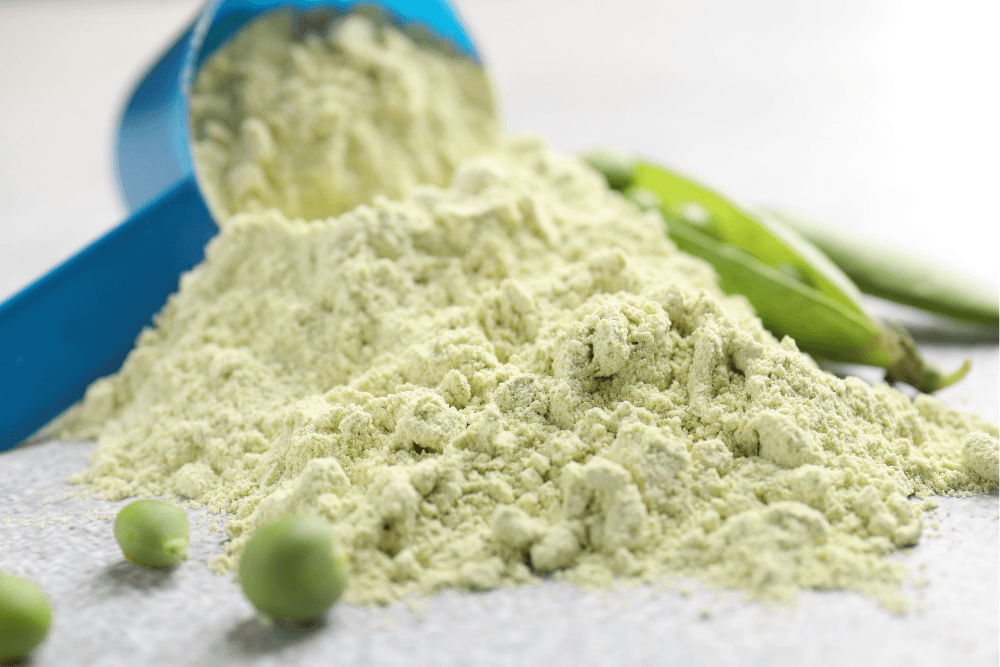
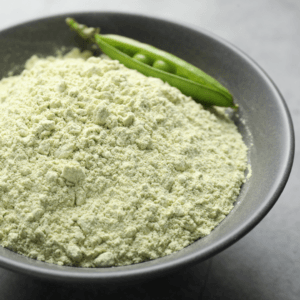
Made from yellow split peas, pea protein has become one of the most researched plant proteins available. It gives aging bodies many of the nutrients they need to stay strong and healthy.
The Silent Crisis Hidden in Plain Sight
 Before we can understand why pea protein matters so much, we need to talk about something that happens to every human body after the age of 40 (and that most doctors still aren’t routinely screening for).
It’s called sarcopenia: the gradual loss of muscle as you get older.
It doesn’t happen overnight. Instead, it shows up little by little, often disguised as feeling a little more tired, needing more recovery after physical activity, or finding that maintaining a healthy weight requires more effort than it used to.
By the time most people notice these changes, they’ve already lost a meaningful amount of muscle.
That’s important because muscles do much more than help you stay strong.
It also helps:
- Keep your metabolism running well
- Support healthy blood sugar
- Protect your joints
- Keep your bones strong
- Help you stay active as you age
Recent research found that pea protein helped older adults build muscle just as well as whey protein.
That challenges the old belief that only animal protein can effectively support aging muscles.
Researchers have also found that muscle loss speeds up as we age, especially after 75.
As muscle disappears, bones often become weaker too.
That increases the risk of falls, broken bones, and losing your independence.
Here’s where protein becomes critical, and where most aging adults fall short.
Studies suggest that older adults may need anywhere from 11% to 250% more protein than younger adults to achieve the same muscle-protective effect.
Yet for many older people, appetite naturally decreases with age, making it difficult to meet even standard protein targets through food alone. Pea protein offers a practical and scientifically supported solution.
Why Pea Protein Stands Apart From Other Plant Proteins
 Not all plant proteins are created equal. Soy protein raises concerns for some individuals due to its phytoestrogen content and prevalence of GMO varieties.
Rice protein is lower in the essential amino acid lysine.
Hemp protein is nutritionally balanced but relatively low in protein concentration.
Pea protein sidesteps these issues and offers a genuinely impressive nutritional profile.
Yellow peas are naturally rich in branched-chain amino acids (BCAAs), particularly leucine, which plays a central signaling role in triggering muscle protein synthesis.
They contain all nine essential amino acids, making pea protein what nutritionists call a “nearly complete” protein. They have a digestibility score that rivals many animal proteins. And perhaps most relevantly for aging adults, they’re entirely free from the two most common food allergens: dairy and gluten.
A study evaluated how pea protein isolates compared to whey in both young adults (ages 20–28) and older adults (ages 65–81). Researchers concluded that pea and whey proteins share the same essential qualities for maintaining muscle protein synthesis.
The gut health dimension adds another layer. Pea protein’s naturally high fiber content feeds beneficial gut bacteria. And emerging research on the gut-muscle axis suggests that what’s good for your gut may be directly good for your muscles.
The Heart Connection You Weren’t Expecting
 Sarcopenia is one side of the anti-aging coin. Cardiovascular health is the other. And here, pea protein offers a surprise that even many nutrition researchers find notable.
Research found that pea protein hydrolysate (a partially digested form of the protein) may lower blood pressure in both animal models and humans.
The mechanism appears to be related to arginine, an amino acid abundant in peas, which the body uses to produce nitric oxide. Nitric oxide is the molecule responsible for relaxing and dilating blood vessels, supporting healthy circulation, and reducing arterial stiffness, the kind of stiffness that accumulates with age and drives cardiovascular risk.
A reduction of just 2 millimeters of mercury in systolic blood pressure has been estimated to reduce stroke-related deaths by 6%, lower the rate of heart disease deaths by 4%, and reduce overall mortality by 3% among Americans.
The Blue Zones, remarkable pockets of extraordinary human longevity, share a consistent dietary pattern: legumes form the backbone of daily eating.
In Okinawa, Japan. In Ikaria, Greece. In Loma Linda, California. The longest-lived communities on Earth aren’t eating more meat. They’re eating more plants, specifically peas and legumes.
The Challenge: Making It a Daily Habit
The science is compelling. However, there’s a practical problem that keeps even well-intentioned people from actually making the protein shift: most pea protein products are not particularly pleasant to consume.
Anyone who has tried a poorly formulated pea protein powder knows the experience well. The chalky texture. The earthy, almost grassy flavor that lingers. The way it clumps when you try to mix it in water.
Even people who know how great the health benefits are often slowly abandon these products within a few weeks because the daily experience of consuming them is, bluntly, unpleasant.
This is where formulation matters enormously.
My Top Recommendation: HeartGlow by Glorious Day
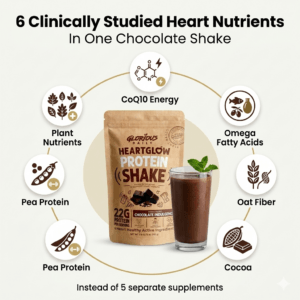 Built around 22 grams of organic pea protein per serving, HeartGlow was formulated with five clinically studied ingredients:
- 22g Organic Pea Protein — the muscle-preserving, heart-supporting foundation
- Oat Beta-Glucans — the only dietary fiber to carry an FDA-authorized heart health claim
- 1,000mg+ Plant-Based Omega 3, 6 & 9 (from Ahiflower® oil) — at the dose the American Heart Association recommends
- Ubiquinol CoQ10 — the bioavailable, body-ready form your heart uses approximately 100,000 times daily
- High-Flavanol Cacao — shown in research to support flexible blood vessels and healthy blood flow
The formulation is designed as a single-scoop morning shake. And most importantly, it tastes like rich chocolate milk, not a supplement.
At approximately $3.50 per serving (often less than a morning coffee) and backed by a 90-day money-back guarantee, HeartGlow is one of the most complete daily longevity habits I’ve seen formulated into a single product.
THANKYOU!!!
a very interesting article, gives food for thought
A VERY GOOD ARTICLE – WILL INCREASE MY INTAKE OF PEAS!! THANK YOU FOR SHARING THE ARTICLE.
E.Jane Clark