


If you have spent any time researching collagen supplements, you have probably run into two completely opposite claims.
Camp one says collagen is the closest thing to a fountain of youth you can buy.
Camp two says collagen supplements are a scam, because your stomach destroys collagen the moment you swallow it.
Here is the less clean-cut truth: both camps are partly right. And once you understand why they are both partly right, you will know more about collagen than 95% of the people buying it, and you will be much harder to fool.
Let’s dig in.
First, the criticism (because it deserves a fair hearing)
 The skeptics’ argument goes like this:
Collagen is a protein. As with every protein you eat, your digestive system breaks it down into its constituent amino acids before absorbing them. Your body does not recognize “collagen” arriving in your bloodstream and instinctively knows to deliver it to your crow’s feet. It just sees amino acids.
So drinking collagen to build collagen, the argument goes, is like mailing someone a house of cards and expecting it to arrive as a house of cards. It gets destroyed in transit and all that arrives is a game of 52 pick-up.
So why do clinical trials keep showing that collagen supplements improve skin?
What the research actually shows
 Over the past decade, dozens of randomized controlled trials have tested oral collagen supplements against placebo. One 2024 analysis compared results across 34 of these trials, covering the major bovine (cow-derived) and marine (fish-derived) collagen products on the market.
The overall pattern: collagen supplements do outperform placebo on measures like wrinkle depth, hydration, and elasticity. The skeptics are wrong to say they do nothing.
However, the size of the effect is where things get interesting. Across those trials, the average wrinkle reduction after roughly two months of daily use was in the single digits: about 7% for bovine collagen and about 9% for marine collagen. Measurable, yes. Dramatic, no. And these results typically required 10 to 20 grams per day, taken faithfully, often for 12 weeks or more.
So the honest summary of the evidence is this: traditional collagen supplements work a little, slowly, at large doses.
Which raises the obvious question. If your body demolishes the collagen anyway, why do they work at all? And is there a way to get better results?
The cards matter more than the house
Remember the destroyed house-of-cards analogy. Your body cannot use the house, but it absolutely can use the cards.
Collagen, it turns out, is built from an unusual set of amino acids. Roughly one third of it is glycine. Another large share is proline and alanine. These are not the amino acids that dominate most modern diets.
When you swallow a scoop of hydrolyzed collagen, you are essentially taking a glycine and proline delivery vehicle. Your body breaks it down, notices it suddenly has an unusual surplus of exactly the raw materials skin collagen requires, and puts some of them to work.
That is the real mechanism. It’s not magic collagen molecules swimming to your face, but rather raw materials arriving in roughly the right proportions.
Once you see it that way, the mediocre trial results start to make sense too. A crude extract from cow hides or fish skins contains the right amino acids, but bundled with plenty your skin does not need in those ratios. Your body has to break the chains apart, sort the useful from the surplus, and discard the rest. That sorting process is why traditional collagen needs such large doses to move the needle.
The logical next question nobody was asking until recently
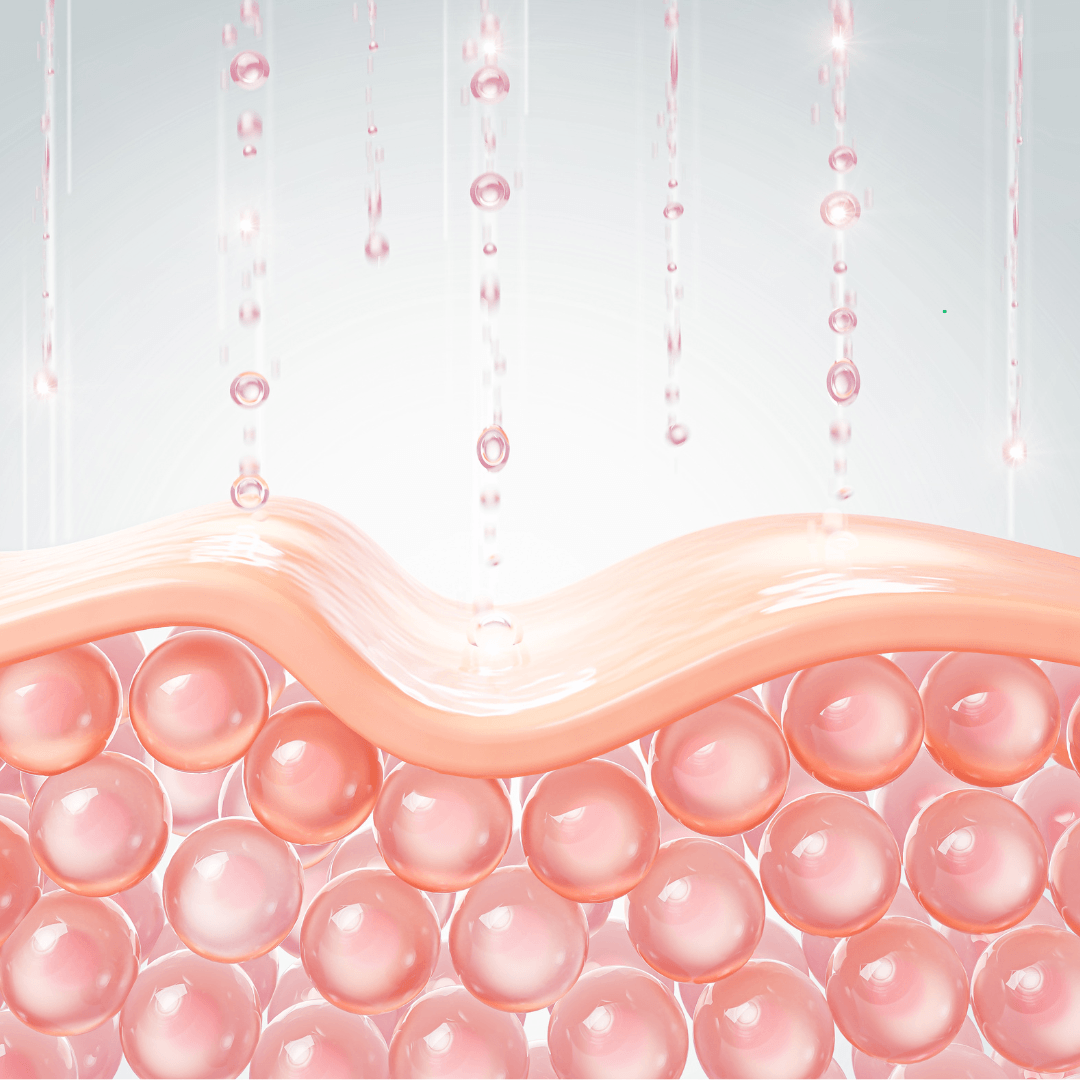 If the entire benefit comes from delivering the right amino acids in the right ratio, why extract them from an animal at all?
Why not skip the demolition step entirely and provide the exact 19 amino acids that make up human type 1 collagen (the kind that dominates your skin), already separated, already in the precise ratio your skin uses?
This approach, sometimes called biomimetic or precision amino acid supplementation, is exactly what researchers have been testing over the past few years, and the results are worth paying attention to.
In a 2024 randomized, double-blind, placebo-controlled study, 90 participants took 5 grams per day of a plant-derived amino acid blend matched to the profile of human type 1 collagen. After 8 weeks, imaging measurements (not questionnaires) showed a 32.9% reduction in visible wrinkles, along with a 21% increase in skin hydration.
A separate 2025 trial, also randomized, double-blind, and placebo-controlled, tested the same ingredient in 60 women aged 39 to 65 and found increased dermal collagen signal at the same 5-gram dose.
Compare that to the single-digit averages from the 34-trial analysis of traditional collagen, achieved at doses two to four times larger, and a pattern emerges. Precision appears to beat quantity.
A warning about the “vegan collagen” aisle
Here is where you need to be careful, because the supplement industry noticed this research too, and the response has been predictable.
The market is now flooded with products labeled “vegan collagen booster” or “collagen support” that contain little more than vitamin C, biotin, and a sprinkle of bamboo extract. Vitamin C is essential for collagen synthesis (your enzymes cannot build collagen without it), but vitamin C alone is like hiring a construction crew and giving them no materials.
If a plant-based collagen product does not list a complete amino acid profile, it is not delivering the raw materials this entire article has been about. Read the label. Look for the amino acids by name.
What to actually look for, whichever route you choose
A clinically studied dose. For hydrolyzed animal collagen, the trials generally used 10 to 20 grams daily. For the biomimetic amino acid approach, the published trials used 5 grams. A product that hides its dose behind a “proprietary blend” with no gram amounts is telling you something.
The actual studied ingredient. “Contains collagen” is not the same as “contains the form and dose that was tested in humans.”
Vitamin C included or taken alongside. Your body converts proline and lysine into collagen’s key components using vitamin C-dependent enzymes. Without it, the raw materials sit unused.
Third-party testing. Animal-derived collagen in particular is extracted from tissue, and whatever accumulated in that tissue (including heavy metals) can come along for the ride. Look for batch testing from an ISO accredited independent lab, with certificates you can actually view.
Realistic expectations. Even the strongest results in the literature took 8 weeks of daily consistency. Anything promising a transformation in days is false advertising, not science.
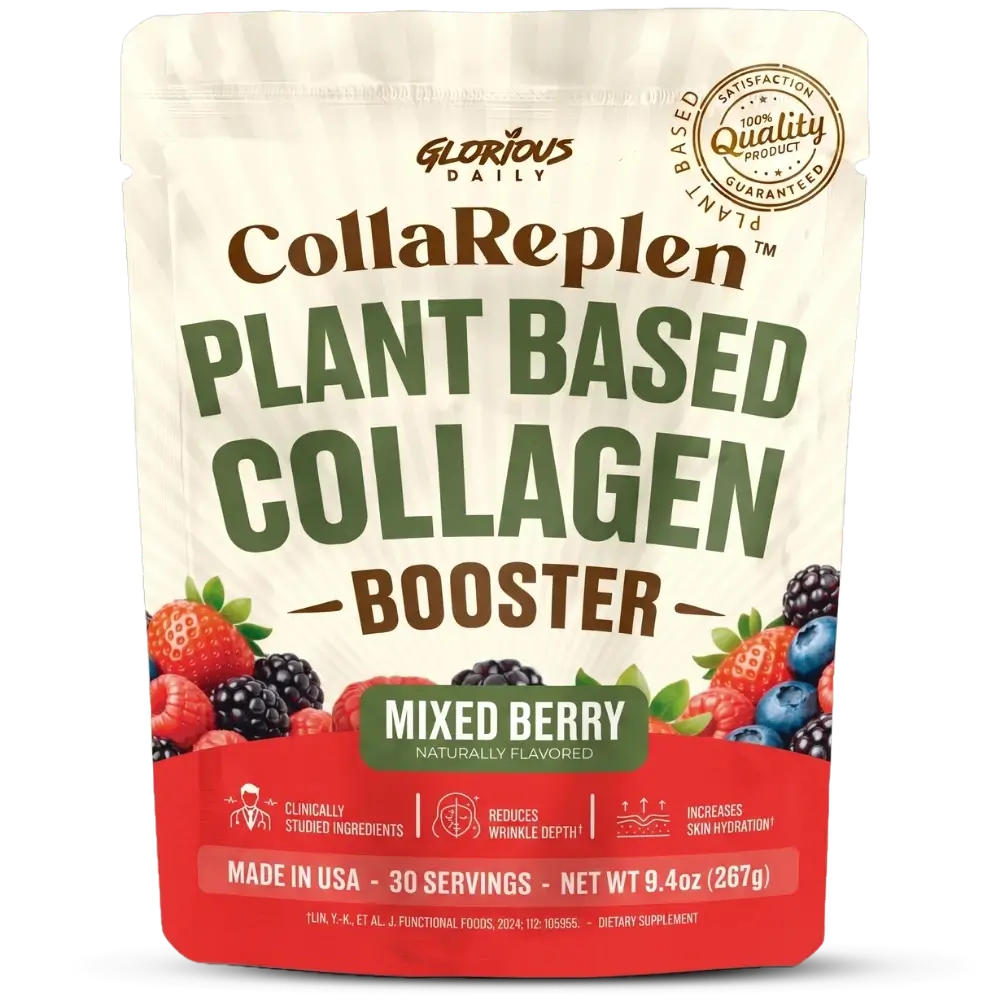
My Top Recommendation: CollaReplen Plant-Based Collagen Booster by Glorious Daily
 The skeptics are right that your body breaks down every collagen supplement into amino acids. The enthusiasts are right that collagen supplements measurably improve skin. The resolution of the paradox is that the amino acids are the product, and always were.
Which means the smartest question is not “does collagen work?” It is “what is the most efficient way to give my skin the exact raw materials it uses?” Based on the current evidence, a precise, complete amino acid profile at a clinically studied dose appears to outperform crude extracts at double the dose or more.
With all the facts in mind, the product I recommend and personally use is CollaReplen by Glorious Daily, which delivers the full 5-gram clinically studied dose of VeCollal (the exact ingredient from the trials above), pairs it with the vitamin C your enzymes require, publishes independent third-party lab certificates for every batch, and backs it with a 90-day money-back guarantee.
Just one scoop daily in a delicious, non-chalky formula provides your body the building blocks it needs to achieve the same results published in clinically reviewed medical journals: 32.9% fewer wrinkles, 21% more hydrated skin, and 13% smoother texture in just 8 weeks.
Plus, unlike most collagen supplements, it’s completely plant-based and just $1 per serving.
Click here to learn more about CollaReplen and save up to 46% on your first order!